Guides / Stop Herons Eating Koi
How To Stop Herons Eating Your Koi
Herons are one of the most common and destructive predators of koi ponds. A single visit from a grey heron can result in the loss of several fish — sometimes worth hundreds or even thousands of pounds. Protecting your pond from herons is one of the most important things a koi keeper can do.
Why Herons Target Koi Ponds
Koi ponds are ideal hunting grounds for herons. Several factors make them irresistible:
- Fish are visible — koi are large, brightly coloured, and easy to spot from the air
- Ponds are shallow — especially around the edges, allowing herons to wade in and strike
- Fish are slow — compared to wild river fish, pond koi have little natural wariness of predators
Signs A Heron Is Visiting Your Pond
Herons often visit at dawn before the garden is active. Look for these warning signs:
- Fish disappearing — especially overnight or in the early morning
- Fish hiding constantly at the bottom of the pond
- Muddy footprints or disturbed edges around the pond
- Injured fish with puncture wounds or torn scales
Common Ways People Try To Stop Herons
There are several popular methods that koi keepers use to deter herons, each with advantages and drawbacks.
Pond Nets
Nets stretched over the pond surface are the most common approach. They physically block herons from reaching the water. However, nets sag under their own weight, collect leaves and debris, and make feeding and maintenance difficult. They also detract from the appearance of a well-designed pond. For a detailed comparison, see our guide on pond nets vs glass jump guards.
Fishing Line
Monofilament fishing line strung around the pond at different heights can deter herons by creating an invisible obstacle. It's cheap and discreet, but it's easily damaged, difficult to maintain, and does not work reliably against determined birds.
Motion-Activated Sprinklers
Sprinklers triggered by movement can scare herons away temporarily. They are useful as a supplementary deterrent, but herons are intelligent and can learn to avoid the sensor zone. Sprinklers also require a water supply and can be triggered by other animals or people.
Fake Herons
Decoy herons placed near the pond are a popular budget option, based on the idea that herons are territorial and won't approach another bird. In practice, herons quickly learn that decoys are not real. Most koi keepers report that decoys stop working within a few days.
A Long-Term Solution For Koi Ponds
A low glass barrier creates an obstacle at the pond edge that may make access harder for herons. It cannot guarantee that a bird will not reach fish; height, water level, gaps and layout matter.
Unlike nets, glass guards keep the pond fully visible, don't interfere with feeding or maintenance, and need periodic cleaning and fitting checks. The same barrier can also help reduce the risk of koi from jumping out during spawning or periods of stress.
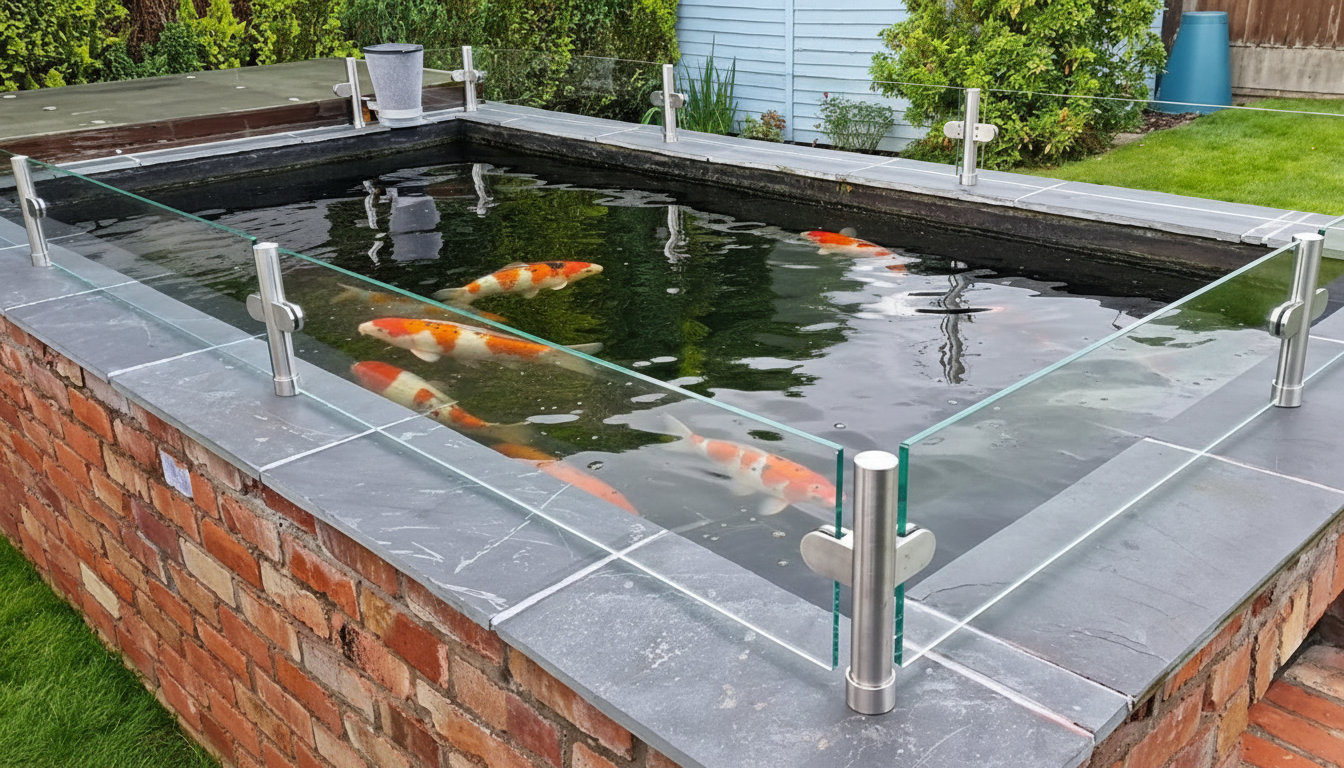
Typical Pond Guard Layout
Stainless steel posts are positioned around the pond perimeter at intervals of approximately 1500 mm. Glass panels sit between the posts, creating a continuous barrier. Corner posts and end posts are used where the layout changes direction.
The exact number of posts and panels depends on the size and shape of your pond. Our Pond Guard Designer calculates everything you need based on your measurements. For more detail on post spacing, see how far apart should pond guard posts be?
Frequently Asked Questions
Do herons eat koi fish?
Yes. Grey herons are one of the most common predators of koi ponds in the UK. They can swallow koi up to 30 cm in length and will return repeatedly once they find a productive pond.
What time of day do herons attack ponds?
Herons most commonly visit ponds at dawn, often arriving before the garden is active. However, they can strike at any time of day, especially when undisturbed. A physical barrier may make access from pond edges harder, without guaranteeing protection.
How deep should a koi pond be to stop herons?
Deeper ponds (over 1.2 m at the edges) can reduce the risk of heron strikes, but depth alone is not a reliable defence. Herons are patient and can wade into shallow margins. A perimeter barrier may help as part of a pond-specific protection plan.
How do you protect koi from birds?
Consider combining a pond-edge barrier with deterrents suited to your pond. Glass guards may make edge access harder while keeping a clear view, but need periodic cleaning and fitting checks and cannot guarantee predator protection.
Protect Your Koi Pond
Use the Pond Guard Designer to calculate the posts and glass panels required for your pond.